In Case I Dont See You Again
Summary
- You don't necessarily demand to buy Dynamics 365 (Dynamics CRM) licenses to get the CRM functionality you lot demand.
- Power Apps and the Common Data Service have the components to build a simple CRM app that looks and operates *exactly* similar Dynamics CRM (without the features that you lot don't need)
- Dynamics 365 is a Power App
- Don't need all that Dynamics 365 functionality? Build a CRM Power App (I will show you how)
"We demand a CRM!"
I was facilitating some Power Platform training to client's internal squad the other day. This arrangement has Office 365 (whoops, I hateful Microsoft 365), has a number of legacy SharePoint and Excel based solutions and is looking to build and revamp many line of business organisation apps using the Power Platform. We talked about means we could build apps using the Common Data Service, Power Automate and of course Power Apps.
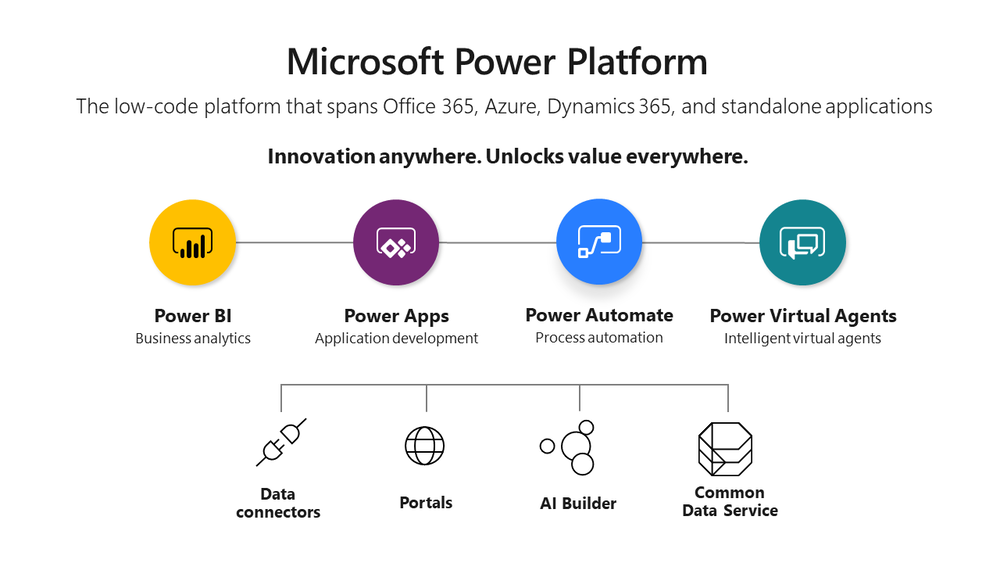
We were discussing the provisioning of Common Information Service environments. Walking through the process, I noted that currently you need to specify that if y'all want to enable the Dynamics 365 apps at the showtime when you provision, and they cannot be installed later on.
"Expect a infinitesimal…" came a question from 1 of the squad. "What if nosotros desire CRM later? Does this hateful we need to start from scratch and migrate our information?"

It'south a keen question. Yet, in this example, I have a high level agreement of the system's business organization and what their ultimate objectives.
They are a non-turn a profit organization that performs research projects and programs. Many of their initiatives are government funded. While they do have external stakeholders they don't "sell" in a typical sense. They practise collect feedback and data from their stakeholders they also practise not have a customer support centre or track tickets. That being said, they have a number of groovy use cases for model-driven, sheet and portal Power Apps.
I answered the question with a question. "What practise you need Dynamics 365 (Dynamics CRM) for anyway?"
Note: Microsoft hasn't called their suite of business concern applications "CRM" (Customer Relationship Management) for a few years now. However, it even so is a common term for customer engagement software solutions. The "CRM" apps are now referred to as Dynamics 365, and are a collection of diverse apps (eastward.g. Dynamics 365 Sales, Dynamics 365 Customer Service and many others)

The perception in the organization is that they demand a centralized repository of their stakeholders, related communications and potentially other concern information.
They felt they needed a CRM system.
Despite looking at the Power Apps for some of the line of business apps, at that place were folks within the organization suggesting using (ugh) SalesForce.com, Dynamics 365 (CRM) or potentially another CRM system.
My answer was that if they were to move ahead with the Power Platform, that they would substantially go well-nigh of all that functionality from the "vanilla" Common Information Model and that could expose their required "CRM" functionality in a simple model-driven (or even Sail) Power App.
Any unique needs could be very hands added using the same tools and techniques being evaluated for building a number of other line of business applications.
This particular system would probable never need things similar Leads, Opportunities', SLAs, Cases, etc.
It made me realize that again, perchance folks are unclear of what Ability Apps and the Power Platform offers and the confusion of what Dynamics 365 offers.
The primal affair to remember is this; Dynamics 365 is just a Power App.
The Dynamics 365 "first party" Power Apps provide an incredible corporeality of functionality for specific business cases. Sales management (Dynamics 365 Sales) Customer back up direction (Dynamics 365 Customer Service) as well as many others (Field Service, Projection Service, Marketing, etc). that extend the Common Data Model and provide line of business applications specific to specific workloads.
Fifty-fifty the ERP (Enterprise Resource Planning) systems like Dynamics 365 Supply Concatenation Management is beginning to utilize the Common Data Model with dual-write entities.
However, not everyone needs the Dynamics 365 first party applications.
In fact, in the Dynamics CRM 3.0 to Dynamics CRM 2016 days, many projects I worked on we removed or hid many of the sales and service entities and functions and added our ain. These types of apps were referred to equally "xRM" or "Anything Relationship Management".
You don't demand a CRM because y'all already accept a CRM (and it's a Ability App).
The customer was quite relieved to know that by choosing the Power Platform, they could quickly accept the CRM system they needed. The Mutual Information Model provided the required entities and there were already pre-built forms and views for Accounts, Contacts and Activities in the Common Data Service.
Fifty-fifty better was that the licensing for a Power Apps Per User plan is considerably less than a total Dynamics 365 plan license, and the license would cover both their line of business apps and CRM.

For many organizations such every bit non-profits, charities and regime departments, a Ability App can provide the core functionality required.
Even if an organisation did need to eventually deploy Dynamics 365 showtime party apps, the hope is that someday those apps can be installed after the fact on an existing CDS environment.
Side Bar: Accelerating your Power Apps
Another great initiative by Microsoft is the creation of manufacture accelerators. These accelerators are built following industry standards and tin can be installed on both vanilla CDS and Dynamics 365 environments and do not require actress licensing. These provide customers with a head showtime building their industry specific line of business applications. Microsoft is adding and updating accelerators daily, check them out hither https://docs.microsoft.com/en-us/common-information-model/manufacture-accelerators
Build Your Own Dynamics CRM 2020 in x Minutes
The follow are steps to build a super simple, lightweight "CRM" system on the Common Data Service using existing components. I accept provided the solution files on my GitHub site, but yous could very quickly build your ain CRM app and extend it further for your own purposes.
Navigate to https://brand.powerapps.com and choose your Common Data Service environment (or create one).

The next footstep is to create a solution. Solutions are the method to move your avails from one Power Platform environs to another.

In the solution, cull New -> App -> Model-driven app (this will be our new CRM app!)

Give your CRM app a proper name (could be merely "CRM"). In my case I cull "Dynamics CRM 2020"

Nosotros need to add together some core CRM entities to our app. One of the many benefits of the common data model is that information technology has a set of predefined entities that are core to a CRM organization. Click on the Entities component.

Cull the Business relationship, Contact and Activity entities. You could make up one's mind to add additional entities that might be useful to your organization from the Common Information Model (or create your own). For now, we are keeping our CRM system uncomplicated.

Click on "Site Map" then nosotros tin build the navigation for our CRM app.
Nosotros will add an "CRM" area. Nosotros can go back later and add other areas to our app.

Lets add a "Stakeholder" group to hold our Accounts and Contacts (Organizations and People) entities.

Add together the Account entity for the sub area.

Add together the Contact entity…

Nosotros will add a communications grouping
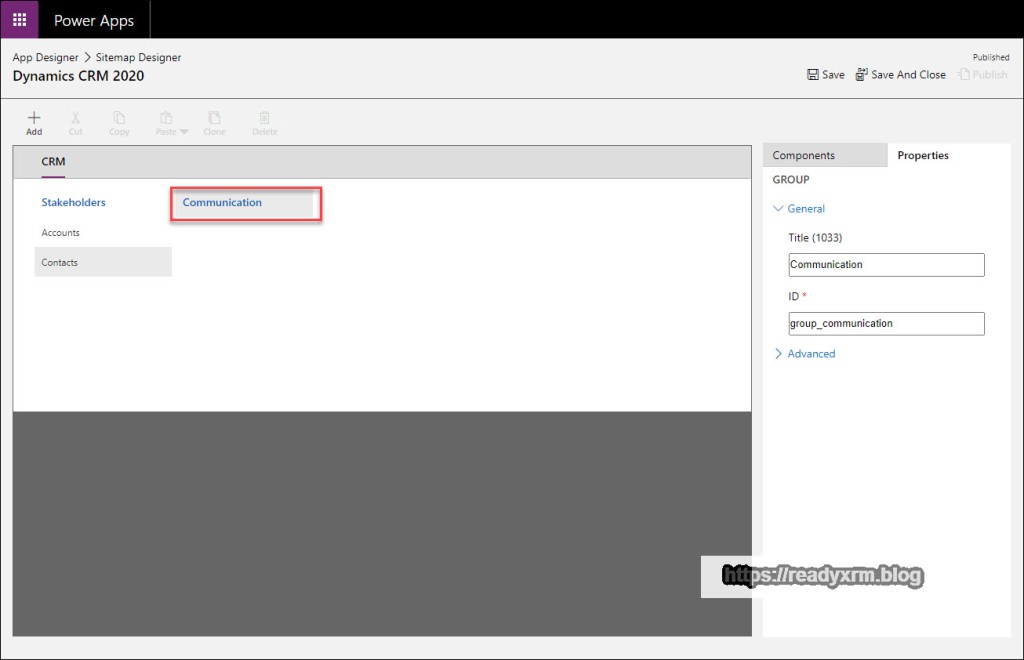
Add the Activities entity in the Advice Grouping.
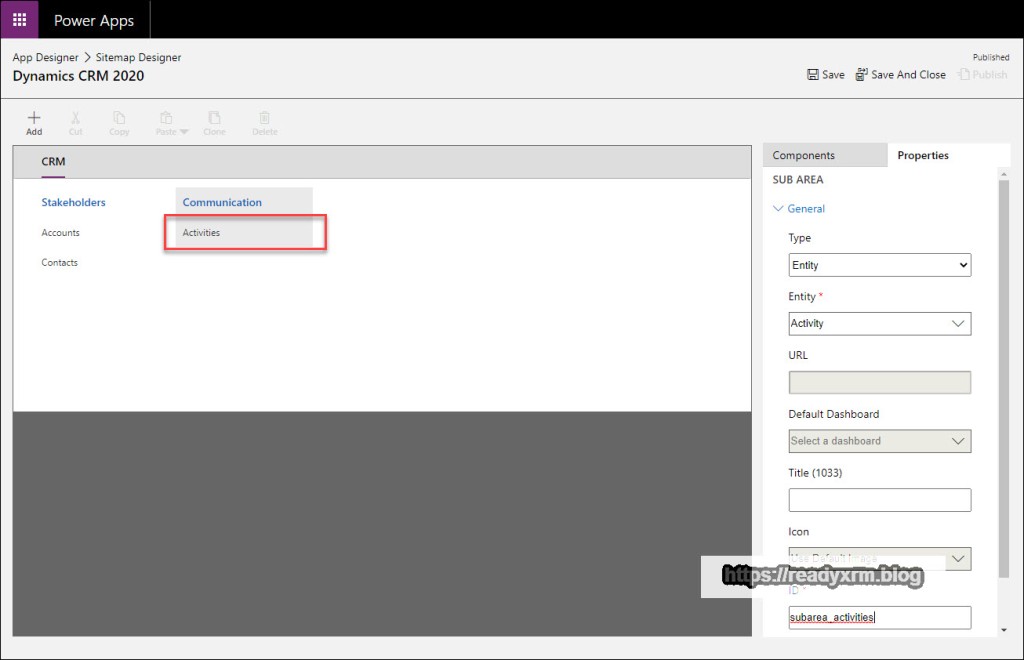
Finally, relieve our site map and publish.

We are pretty much washed. Click Done in the maker area.

In the Apps, you lot should at present accept a CRM model driven app.

Running the App, nosotros have a model driven app with views of information, many existing functions like searching, exporting to excel, etc. It looks and feels exactly like Dynamics CRM, because, in a way, it is.

Yous tin can continue to build on this app by adding dashboards, other entities, or even adding automation using Ability Automate or embedding canvas apps or edifice portals. You could also install some of Microsoft accelerators to go a jump kickoff on extending your arrangement.
If you do demand some of the sales and service functions, but not necessarily all the bells and whistles of Dynamics 365, you could build these components besides or wait at some ISV products like RapidStartCRM.
The point is, model driven Ability Apps evolved from Dynamics CRM and should exist your core CRM for your system, no matter what you lot business is.
Conclusions
If yous feel you demand a CRM arrangement for your organization, you definitely need to consider Power Apps. Not but volition you lot have an manufacture standard, cloud based organisation that integrates with Microsoft 365 but one that tin exist easily modeled to your own unique requirements. In fact, if you take used Dynamics CRM in the past, you won't even notice the divergence.
Cover Photo past Karsten Würth on Unsplash
Coin Photograph past Micheile Henderson on Unsplash
Diskette Photo by Fredy Jacob on Unsplash
Nick Doelman is a Microsoft Business concern Applications MVP and has been configuring unique line of business applications built on the Power Platform before it was even called the Power Platform. Follow Nick on Twitter @ReadyXRM
brookswittertun1986.blogspot.com
Source: https://readyxrm.blog/2020/06/05/you-likely-dont-need-dynamics-crm-you-need-a-power-app/
0 Response to "In Case I Dont See You Again"
Post a Comment